Language
ZH

Choose Language

HOME INsights Instruments From HVAC to Formula 1: the amazing Pitot tube
Instruments

From HVAC to Formula 1: the amazing Pitot tube

From HVAC to Formula 1: the amazing Pitot tube
Heating, ventilation, air-conditioning and refrigeration professionals are among the world's foremost experts in airflow: balancing pressures, measuring velocities, ensuring that systems operate at maximum efficiency... So these pros know all about their trusty Pitot tube, the simple yet brilliant device that measures a fluid's velocity and calculates its flow rate. But did you know that the same fundamental technology used in ducts plays an essential role in the highly demanding world of Formula 1 racing? Let's dive into the fascinating (and surprisingly complex) ways in which pitot tubes are used in F1, to see these instruments in a whole new light.

Pitot Tube Basics: A Quick Refresher 

Before we jump into the world of screaming engines and downforce, let's recap the basics. A Pitot tube (named after 18th-century French engineer Henri Pitot) measures fluid flow velocity by comparing static pressure and total pressure (also known as stagnation pressure).

  • Static Pressure: Think of this as the ambient pressure in the system – the pressure you'd measure if the air wasn't moving. In your HVAC world, it's the pressure in the duct without considering the airflow velocity.

  • Total Pressure: This is the pressure measured when the fluid flow is brought to a complete stop (isentropically, meaning without losses). It's the sum of static and dynamic pressure.

  • Dynamic Pressure: This is the pressure created by the movement of the fluid. This is the key to calculating velocity.

1.jpg

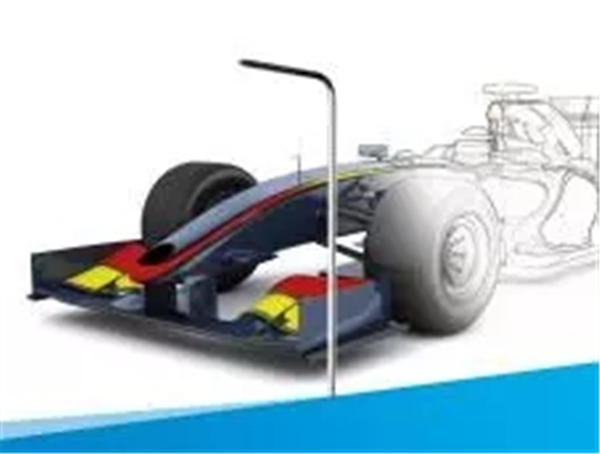
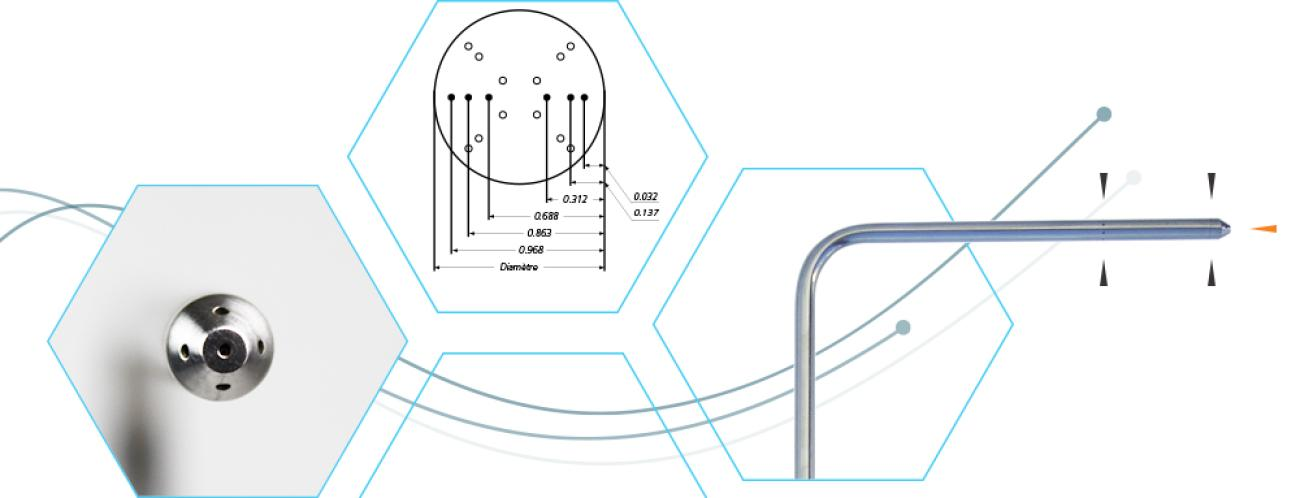
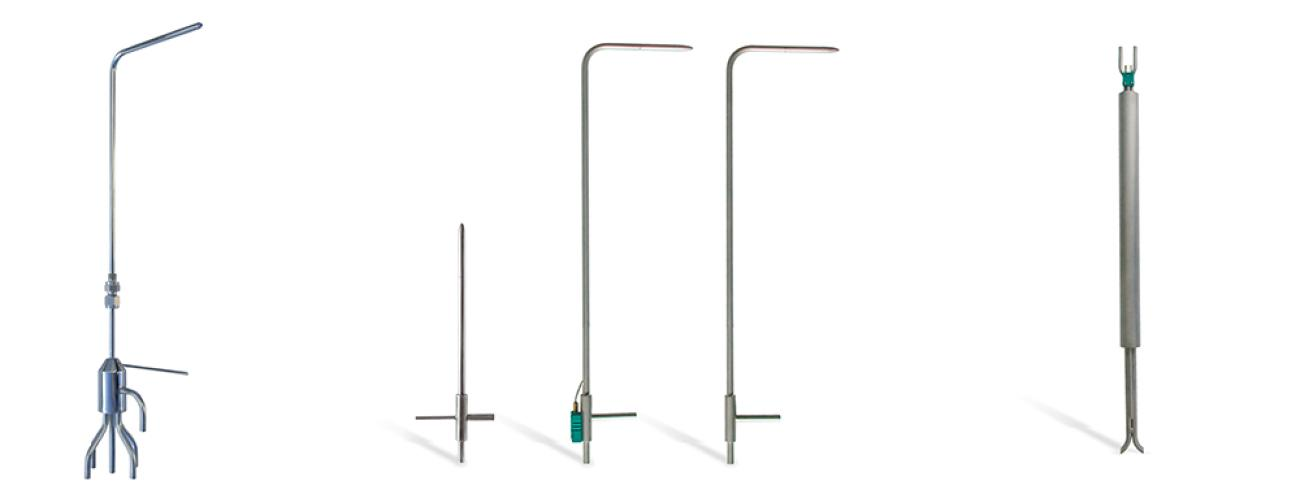
The Pitot tube has two main parts: a forward-facing opening (impact port) that measures total pressure, and side ports that measure static pressure. The difference between these pressures gives you dynamic pressure. And, thanks to Bernoulli's principle (which you probably know well!), we can calculate velocity: 

Velocity = √(2 * Dynamic Pressure / Air Density) 

You use this principle every day when you're measuring airflow in ducts. But in F1, things get… a little more intense.

Early Days of Pitot Tubes in F1: Simple Speedometers

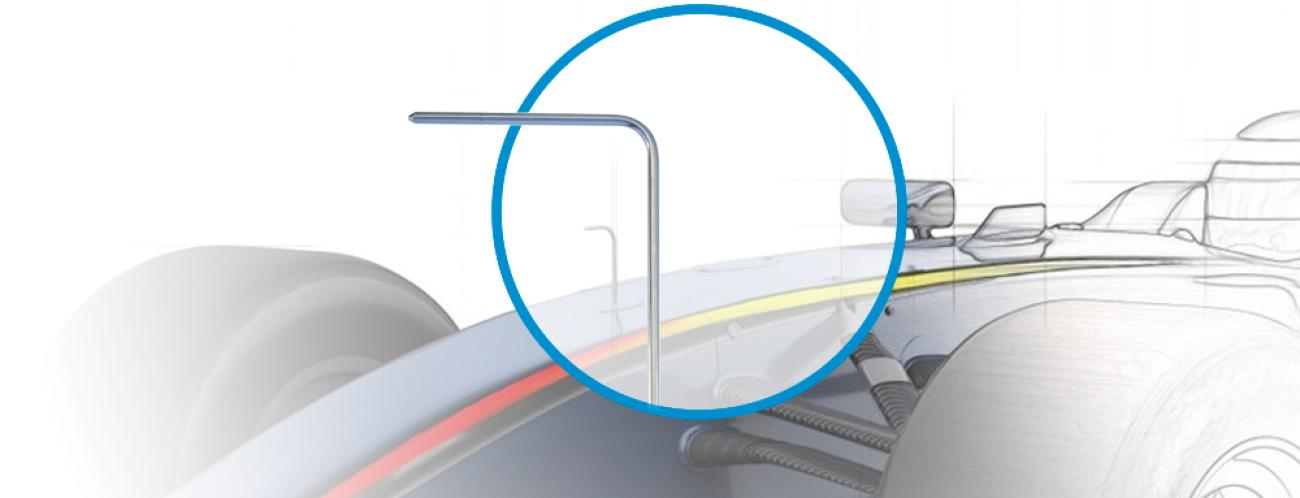
In the early days of Formula 1, Pitot tubes served a relatively straightforward purpose: measuring airspeed. A single Pitot tube, often mounted on the nose cone, provided a basic speed reading for the driver and engineers. This was valuable, but it was just the tip of the iceberg. The information could be used to help the driver adapt his driving to the situation.

1.jpg

The Aerodynamic Revolution: Pitot Tubes Go High-Tech

As Formula 1 became increasingly focused on aerodynamics, the role of the Pitot tube evolved dramatically. It went from a simple speedometer to a sophisticated tool for understanding and manipulating airflow. Here's how:

  • Wind Tunnel Testing: This is where the magic really started. Engineers began using arrays of Pitot tubes – sometimes dozens, even hundreds, arranged in precise grids – to map the airflow around the car in wind tunnels. This allowed them to "see" the invisible forces at play, identifying areas of high and low pressure, flow separation, and turbulence.

  • On-Track Validation: What works in the wind tunnel doesn't always translate perfectly to the track. So, teams started using Pitot tubes during test sessions to gather real-world data, comparing it to their wind tunnel findings and refining their designs.

  • Real-Time Telemetry: Today's F1 cars are packed with sensors, and Pitot tubes are a crucial part of that network. Data from these sensors is streamed live to the engineers during races, providing a constant stream of information about the car's aerodynamic performance.

Modern F1 Pitot Tube Applications: Beyond Just Speed

Let's get into the specifics of how Pitot tubes are used in modern F1. It's far more than just measuring overall speed:

1.jpg
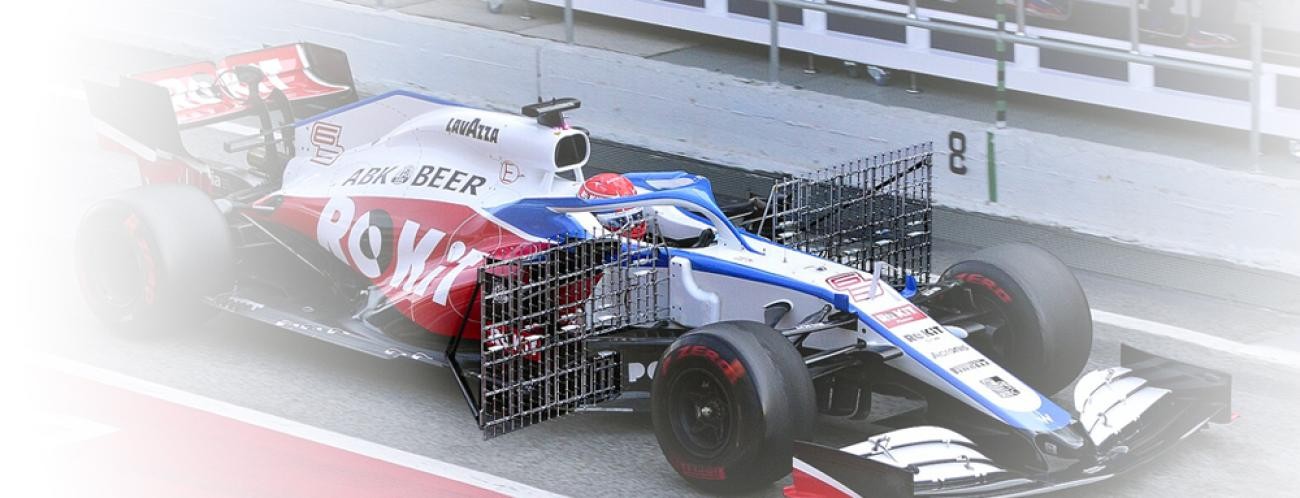
  • Aerodynamic Rakes: The "Beard" of Data: You've probably seen these – those large, intricate structures, often mounted behind the front wheels or near the rear wing, that look like giant combs or "beards." These are aerodynamic rakes, and they're packed with tiny Pitot tubes.
         . What they do: They create a detailed, 3D map of the airflow in specific areas of the car. This allows engineers to visualize the complex flow patterns, identify where the air is separating from the body (creating drag), and understand how different aerodynamic components interact.
         . Why they're important: This data is crucial for optimizing downforce (the force that pushes the car down onto the track, improving grip) and minimizing drag (the force that resists the car's motion).

  • Wing Angle Optimization: The angle of the front and rear wings is constantly adjusted to find the perfect balance between downforce and drag for different corners and track conditions. Pitot tubes, mounted on the wings themselves, help measure the pressure distribution across the wing surface, informing these adjustments.

  • Underfloor Flow Analysis: The underfloor of an F1 car is a major source of downforce. Pitot tubes placed beneath the car measure the airflow in this critical area, helping engineers optimize the design of the diffuser and other underfloor elements.

  • Brake Duct Cooling: Just like you need to ensure proper airflow for cooling in HVAC systems, F1 engineers need to manage the intense heat generated by the brakes. Pitot tubes measure the airflow entering the brake ducts, ensuring adequate cooling and preventing brake fade (or worse, failure!).

  • Tyre Wake Studies: The turbulent air around the tyres (the "tyre wake") can significantly disrupt airflow over the rest of the car. Pitot tubes help engineers understand and minimize this disruption.

  • CFD Validation: Computational Fluid Dynamics (CFD) is used extensively to simulate airflow, but these simulations need to be validated against real-world data. Pitot tube measurements provide this crucial validation.

Challenges and Considerations 

Using Pitot tubes in the extreme environment of an F1 car presents some unique challenges:

  • Vibration: Imagine the vibrations a Pitot tube experiences at 200 mph! These vibrations can affect measurement accuracy, so the tubes must be incredibly robust and carefully mounted.

  • Temperature: Air temperature changes rapidly during a race, affecting air density and thus velocity calculations. Temperature sensors are used alongside Pitot tubes to compensate for this.

  • Yaw and Pitch Sensitivity: Pitot tubes are most accurate when aligned directly with the airflow. But an F1 car is constantly turning, accelerating, and braking, meaning the airflow angle is always changing. Sophisticated algorithms are used to correct for these variations.

  • Blockage Effects: The Pitot tube itself can slightly disrupt the airflow it's trying to measure. Engineers minimize this through careful design and placement.

1.jpg

Formula 1 therefore demands Pitot tubes of exemplary design and manufacturing quality. That's why Sauermann also manufactures special custom-built Pitot tubes in its French factory for some of the F1 championship teams!

The Future of Pitot Tubes in F1: Smaller, Smarter, More Integrated

Even with the rise of other advanced measurement techniques (like pressure-sensitive paint and particle image velocimetry), Pitot tubes remain a vital tool in F1. Their future is likely to involve:

  • Miniaturization: Even smaller Pitot tubes will allow for even more detailed airflow mapping with less interference.

  • Sensor Fusion: Combining Pitot tube data with data from other sensors (pressure transducers, accelerometers) will provide a more complete picture of the car's aerodynamic performance.

  • AI and Machine Learning: Advanced algorithms will be used to analyse the massive amounts of data generated by Pitot tubes, providing engineers with faster and deeper insights.


So, the next time you're using a Pitot tube to balance an HVAC system, remember that the same basic principle is helping F1 engineers push the boundaries of speed and performance. It's a testament to the power of fundamental physics and the ingenuity of engineers – whether they're working on climate control or chasing championships. The seemingly simple Pitot tube is a powerful tool, bridging the gap between your everyday work and the cutting edge of motorsport technology.


在线留言
  • Your name *
  • Your phone *
  • Comment *
The name cannot be empty
The phone number cannot be empty
The comment cannot be empty
Submission successful
Submission failed
Related blogs
  • Heat pumps: how do they work and how to maintain them?
    Heat pumps: how do they work and how to maintain them?

    Heat pumps are the new stars of the heating world. These systems outperform others on several fronts, and many governments are introducing new laws and regulations to encourage their use, not least because they’re better for the environment and help combat climate change. In this article, we take a detailed look at the nuts and bolts of this technology.

    Instruments
  • Digital Manifolds: Sauermann Launches its New Generation Range
    Digital Manifolds: Sauermann Launches its New Generation Range

    Two new manifolds, their probes and connected accessories come onto the market, equipped with the latest technologies. Sauermann is launching two new digital manifolds, along with the necessary sensors and accessories, for working on all types of installations using refrigerant: heat pumps, air conditioning, refrigeration and reversible systems, across all sectors from domestic to industrial.

    Instruments
  • Verder Announces Acquisition of Sauermann
    Verder Announces Acquisition of Sauermann

    Vleuten, Netherlands –18-09-2024 Verder, global technology leader in advanced pumping & scientific solutions, is proud to announce the acquisition of Sauermann, a leading supplier in the HVAC-R market. This strategic acquisition marks a significant step forward for Verder, as it continues to expand its product portfolio and strengthen its position in the global pump and equipment industry.

    News
  • Sauermann pressure sensors play a vital role in face mask tests
    Sauermann pressure sensors play a vital role in face mask tests

    As lockdown rules are eased in many parts of the world, the production of respiratory face masks is being ramped up to cater to massive demand from countries affected by the COVID-19 pandemic. Chinese filter manufacturers are turning in large numbers to Sauermann to certify their products to the strictest international standards. Filter test benches require high-precision differential pressure sensors, such as our CP 112 range, as part of the test protocol. Here, we explain how and why.

    Instruments
Need help