What are volatile organic compounds?
VOCs are a large group of chemicals that can easily be emitted as gases into the air. To qualify as a VOC, a substance has to be volatile – in other words, the molecules evaporate or sublimate under standard temperature, humidity, light (UV) and pressure conditions. The term therefore covers a relatively broad spectrum of compounds, whose origins can be either artificial (evaporation of solvents, chemicals, etc.) or natural (emitted by plants, through fermentation, etc.).
For IAQ professionals, the most important VOCs are chemicals that are easily emitted as gases under ambient conditions, thereby building up in the air inside a building. The main sources of these substances are as follows:
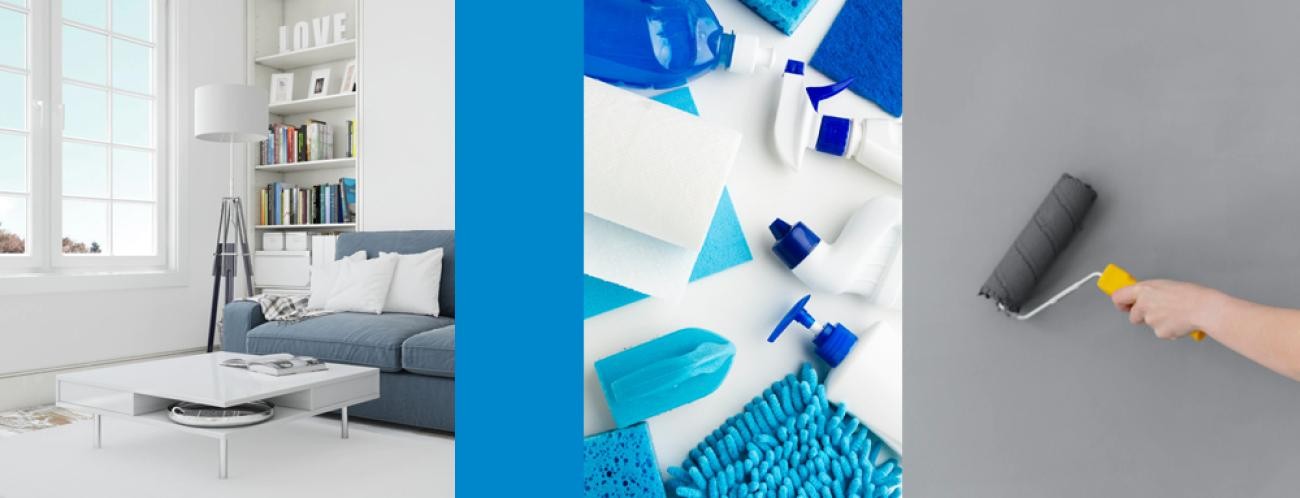
- Cleaning and maintenance products: certain household products, such as detergents, cleaning products and air fresheners.
- Building and finishing materials: certain materials such as paints, varnishes, adhesives and carpets.
- Furniture and household items: certain objects such as mattresses, cushions and toys.
- Electronic devices such as printers and computers.
- Heating equipment such as ovens and wood-burning stoves.
- Activities such as smoking, cooking and welding.
Although each of these sources only emits tiny quantities of VOCs, the build-up of these compounds from different origins can leading to worryingly high overall concentrations – expressed as total volatile organic compounds, or TVOCs – in indoor air.
Among the many VOCs found in the atmosphere, those listed below are among the most commonly encountered in the world of IAQ:
 中文站
中文站
 English