Language
ZH

Choose Language

HOME INsights Instruments Air change rate: a vital measurement in the fight against COVID-19
Instruments

Air change rate: a vital measurement in the fight against COVID-19

Air change rate: a vital measurement in the fight against COVID-19
Recommendations from specialist ventilation and air-conditioning bodies all come to the same conclusion: that maintaining indoor air quality is vital in the fight against COVID-19 and other viruses, and that a ventilation system’s air change rate is of paramount importance.

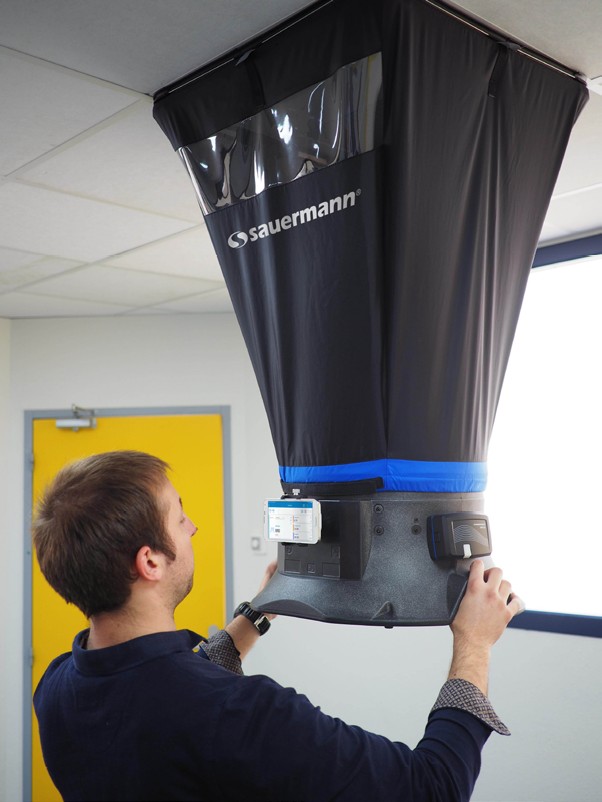
Air flow meter and capture hood: how a measurement instrument helps protect against viruses

1.jpg

Air change rate is the speed at which all the air inside a room is replaced by the ventilation system. It is calculated as the air flow from each ventilation system inlet relative to the total volume of the room in question, and is expressed per hour. Some busy or sensitive rooms, such as hospital wards, open-plan offices and classrooms, require a constant air change rate.

Our DBM 620 air flow meter is the first measurement instrument in its class capable of quickly calculating air change rate. The app automatically combines air flow measurements from each ventilation inlet and works out the rate according to the volume of the room in question.

What air change rate is required to protect against COVID-19?

1.jpg

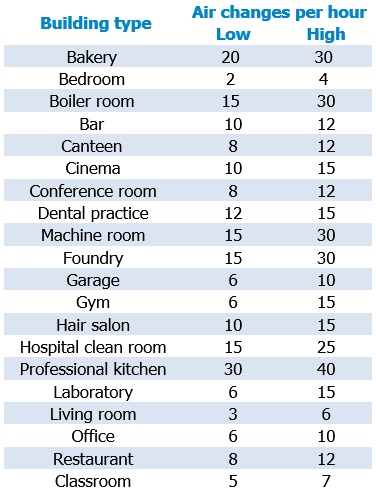
As this table indicates, the recommended air range change differs across various scenarios. The values were published before the COVID-19 pandemic. Even higher rates are now needed to prevent the virus from spreading indoors. In a hair salon, for instance, the sustained use of aerosols means that the ventilation system needs to complete between 10 and 15 air change cycles each hour.

Since viruses are often compared to aerosols on account of their physical behaviour, it makes sense that a high air change rate is required to reduce contamination risk. As the second table below shows, increasing the number of air changes per hour (ACH) from two to four decontaminates the room twice as quickly. But it still takes at least 69 minutes to remove all viral particles from the air. In order to achieve 99.9% removal efficiency in eight minutes, the air in the room would need to be changed no fewer than 50 times per hour!

ACH

Time (mins) required for removal 99% efficiency Time (mins) required for removal 99.9% efficiency
2138207
469104
64669
83552
102841
122335
151828
201421
5068

Other ways to keep indoor air clean

  • Close the ventilation system’s indoor air recycling circuit: the incoming air should come exclusively from outside the building.

  • Maintain vertical laminar air flow: ideally, the ventilation system should move air from the ceiling down towards the ground, vertically and in a uniform manner, and the air outlets in the room should be located near to the floor.

  • Purify the air within the ventilation system: install HEPA filters to trap tiny particles like bacteria and viruses, fit UV purifiers behind the pipes to kill micro-organisms, use a high heat setting (not always feasible for HVAC systems), and employ ionising and ozone-based purifiers.

Changing the air regularly helps to reduce indoor air pollution – especially important given that indoor air is often ten times as polluted as outdoor air. Air change rate is therefore an essential measurement in all aspects of indoor air quality.


在线留言
  • Your name *
  • Your phone *
  • Comment *
The name cannot be empty
The phone number cannot be empty
The comment cannot be empty
Submission successful
Submission failed
Related blogs
  • Heat pumps: how do they work and how to maintain them?
    Heat pumps: how do they work and how to maintain them?

    Heat pumps are the new stars of the heating world. These systems outperform others on several fronts, and many governments are introducing new laws and regulations to encourage their use, not least because they’re better for the environment and help combat climate change. In this article, we take a detailed look at the nuts and bolts of this technology.

    Instruments

  • Digital Manifolds: Sauermann Launches its New Generation Range
    Digital Manifolds: Sauermann Launches its New Generation Range

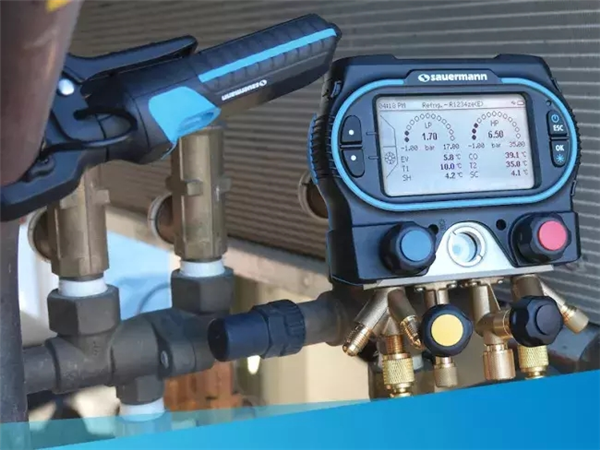
    Two new manifolds, their probes and connected accessories come onto the market, equipped with the latest technologies. Sauermann is launching two new digital manifolds, along with the necessary sensors and accessories, for working on all types of installations using refrigerant: heat pumps, air conditioning, refrigeration and reversible systems, across all sectors from domestic to industrial.

    Instruments
  • From HVAC to Formula 1: the amazing Pitot tube
    From HVAC to Formula 1: the amazing Pitot tube

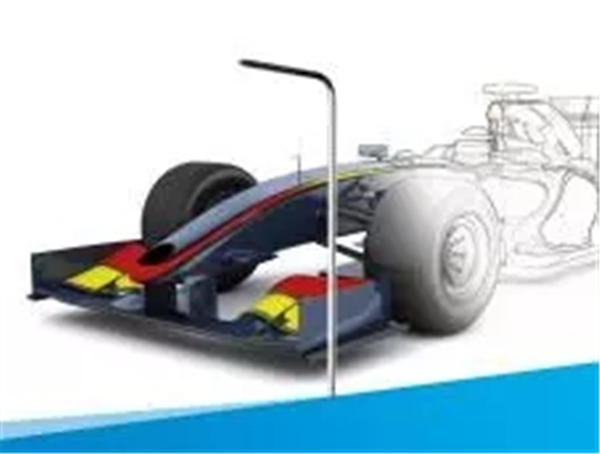
    Heating, ventilation, air-conditioning and refrigeration professionals are among the world's foremost experts in airflow: balancing pressures, measuring velocities, ensuring that systems operate at maximum efficiency... So these pros know all about their trusty Pitot tube, the simple yet brilliant device that measures a fluid's velocity and calculates its flow rate. But did you know that the same fundamental technology used in ducts plays an essential role in the highly demanding world of Formula 1 racing? Let's dive into the fascinating (and surprisingly complex) ways in which pitot tubes are used in F1, to see these instruments in a whole new light.

    Instruments
  • Verder Announces Acquisition of Sauermann
    Verder Announces Acquisition of Sauermann

    Vleuten, Netherlands –18-09-2024 Verder, global technology leader in advanced pumping & scientific solutions, is proud to announce the acquisition of Sauermann, a leading supplier in the HVAC-R market. This strategic acquisition marks a significant step forward for Verder, as it continues to expand its product portfolio and strengthen its position in the global pump and equipment industry.

    News
Need help